Monday, October 21, 2019

Baby Driver: Mise-En-Scene

Edgar Wright's 2017 opus "Baby Driver" follows Baby, a getaway driver in Atlanta, Georgia. In order to cope with his chronic tinitus, Baby must constantly be listening to music through his iPod. As a result, Baby Driver ends up being a beautiful fusion of a musical and a high-octane car chase movie.

Setting

From left to right: Director Edgar Wright, OutKast member
Big Boi, Kevin Spacey, and Atlanta rapper Killer Mike
Baby Driver was both filmed and set in Atlanta, Georgia. Atlanta's prolific cultures behind music and cars make it the perfect backdrop for Baby's musical getaways. To display Atlanta's rich culture, Wright included several of the city's culinary landmarks, such as Godfather's Pizza and Octane Coffee, as well as cameos from some of the areas most high profile artists, Killer Mike and Big Boi.  
The ethos of Atlanta also helps contextualize the crime that takes place throughout the film. In an interview with Complex, Wright said “It’s a travel hub, so it makes sense that it would be the place where criminals would meet up and split again.”

Lighting

Baby Driver utilizes different styles of lighting in order to show contrast between Baby's personal life and his criminal career. Three point lighting is used in scenes where Baby is with his foster dad, Joseph, or his love interest, Deborah. This creates a warm, comforting feeling, which underscores Baby's feelings towards those characters.
Three point lighting in a scene where Baby talk's to his
love interest, Deborah, in a diner.
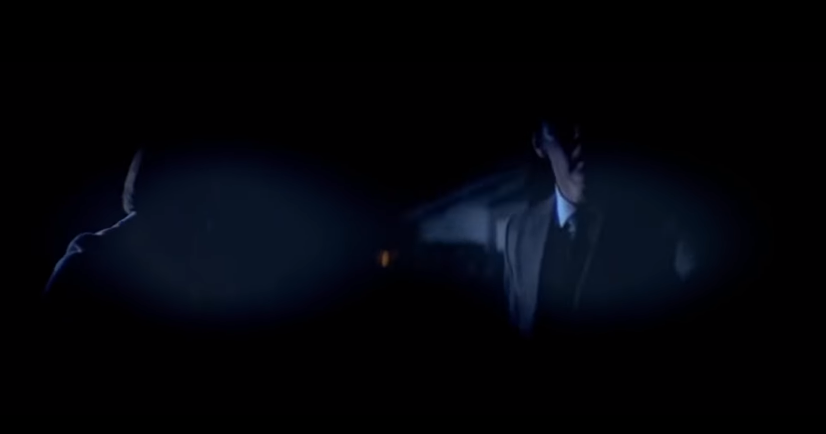
Low-key lighting in a meeting with Baby's robbery crew.
In contrast, low-key lighting is used in scenes where Baby is dealing with his criminal squad. This parallels the idea that this is the darker, more murky part of Baby's life.
The lighting acts as a leit motif to signal to the audience what subject matter Baby will be dealing with in any given scene.

Costumes

From left to right: Baby (Ansel Elgort), Bats (Jamie Foxx),
Darling (Eiza Gonzalez), and Buddy (Jon Hamm).
In the film, costuming is used to parallel the different personalities of Baby's criminal partners. The most notable use of this technique can be seen with Jon Hamm's character, Buddy (pictured on the far right). Buddy's all black costume design is meant to symbolize what happens when a person's life becomes consumed by their criminality. In a scene later in the movie, we discover that his character used to be a successful businessman who turned to crime to pay for drugs under the table. 
Baby in the film's climax, wearing a grey undershirt to
symbolize his plunge into criminality.
The motif of black symbolizing crime is utilized to show Baby's character arc of needing to get his hands dirty in order to break free of his past to be with Deborah. In the beginning of the movie, Baby can be seen wearing a white undershirt, symbolizing his innocence both emotionally and legally. As the plot advances, and Baby get further entrapped in his job, his undershirt becomes darker to demonstrate that he is moving closer towards being consumed by his criminality, like Buddy. 

Staging and Acting

Ansel Elgort brings the character of Baby to life with his subdued, yet expressive performance. Elgort has very little dialogue in the movie, so we are left to analyze his emotions and thoughts through his movements and facial expressions. This can be now better displayed than in the second scene of the film, where Baby gets a reprieve from his shady job to go get coffee. Baby's relief is exemplified by his lighthearted dancing down the street as he listens to the Harlem Shuffle by Bob and Earl.

Wednesday, October 16, 2019

Sound Design Project

The project starts out with the ambient sounds of the city. This establishes the general setting of the story, which is a bustling street. We then hear a car pull into a parking spot, as the driver shuts off the engine, closes the door, and locks the car. This all happens in quick succession, implying that the person is eager to get to their destination.  We recorded these sounds from scratch by parking Garrett's car, slamming the driver's door, and locking the door. We then hear rhythmic footsteps on concrete for about ten seconds before the footsteps switch to a wooden surface. For these sounds, we recorded Ethan walking on the linoleum school floor, and then on cardboard. Ambient bar music fades in and the footsteps stop. We meant for this to convey that the character has stopped outside a bar. A deep voice asks for a name, to which the character responds "I'm Bernie Sanders." This establishes that the bar is high profile enough for there to be a bouncer, and Bernie Sanders is the type of person that attends. We hear a door open and close as the music becomes clearer. For this, we simply opened and closed the office door and increased the volume of the music in order to convey the feeling of entering a bar. To compliment the bar setting, we hear background conversations throughout the scene. Bernie orders a "strawberry daquerie, please," and we hear the clinking of glasses, the pouring of liquid, and a thud on a wooden counter. For this, we did the exact action in real time to demonstrate that the bartender was making the drink for Bernie. We hear sipping sounds as Bernie downs his drink. Suddenly, we hear a knife unsheathe, which is followed by a stabbing sound and a scream from Bernie. Bernie Sanders has just been stabbed. The music continues but are underscored by panicked screams as the bar empties out.

Wednesday, October 9, 2019

Master Editing Technique Examples

Contrast

In the opening scene of Casino Royale (2006), director Martin Campbell utilizes contrast to establish two concepts, one meta, and one within the film. 
In a meta sense, the scene establishes a stark tone shift from previous installments of the franchise. Prior to Casino Royale, the Bond franchise was trademarked by campy action scenes, predictable plots, and over the top side characters. Campbell made the executive decision to take a complete "180" with the property, deciding to show the more realistic side of Bond's world. This decision is paralleled in the scene's black and white presentation, which contrasts with the series' previously saturated colour palette. Right out of the gate, we know that this is a different Bond.
The director also utilizes contrast within the scene to demonstrate the two sides of Bond's character. The opening is composed of two intercut scenes of two different assassinations: the first of a treasonous MI6 agent, and the other his contact. The former is a suave conversation between Bond and the former agent, with both characters tensely conversing while seated. Instead of killing his target in some flashy manner, Bond shoots him with a silenced pistol. This part of the scene displays Bond's ability to be calm, cool, collected, and efficient. The second half of the scene shows Bond in a bathroom engaged in a physical altercation with the former agent's contact. Unlike the previous assassination, Bond is a bit messier in this one. Punches are thrown, blood is drawn, mirrors are shattered, and the fight ends with Bond brutally drowning the contact in a sink as we see the life drain from his body. This scene is indicative of Bond's more aggressive and physical side, and sets the precedent that the life of 007 is not as flashy as we believed it to be before.
The reason Casino Royale's opening works so well is that it uses contrast within the movie to ease us into this new interpretation of the Bond character. The drastic shifts within the scene of a quiet conversation to an uncoordinated fist-fight help us to comprehend the drastic shift within the franchise of fun action flick to a dark espionage thriller.


Parallelism

In Shaun of the Dead (2004), director Edgar Wright uses parallelism to convey the slow descent of a small town from normalcy to a zombie outbreak. The film follows Shaun (Simon Pegg), a downtrodden tech salesman living in a peaceful but boring suburb with his best friend, Ed (Nick Frost). Part of Shaun's daily routine is waking up to a hungover Ed begging him to fetch him a Cornetto (a prepackaged ice cream cone) from the corner store across the street, to which Shaun regularly, but reluctantly complies. The first time we see Shaun embark on his usual walk to the corner store, all of the mainstays of a typical, suburban day are on display: a teenager playing football, a homeless man asking for change, cars speeding down two lane roads on the way to their 9 to 5's, someone washing their car, and a man going for a run. When Shaun enters the store, we can hear upbeat music playing over the radio. Shaun opens up a mini-fridge to pick up Ed's Cornetto and a Diet Coke for himself, before going to the energetic store clerk to check out. Several scenes later, we see Shaun wake up to his monotonous daily routine, and we follow him again to the corner store in a shot-for-shot remake of his previous trip. But this time, things are different.
There is not a child in sight. The homeless man previously begging for change on the sidewalk is now walking lifelessly in the middle of the street. Not a single car is moving on the road, and the one we saw previously being washed now has a hole punched through the windshield. The man who used to being running for pleasure is now frantically fleeing an unknown force down the sidewalk. When Shaun enters the store, the music is now shrill and unnerving, and the mini-fridge has bloody hand prints on it. Shaun tries to check out, but the clerk isn't at the counter. The audience is able to see him zombified in the back of the store. For comedic effect, and to emphasize his lackadaisical character, Shaun is oblivious to all of it. 
The two scenes' parallelism serves the purpose of displaying how boring Shaun's day-to-day life his, while also using it as a back drop to show the development of a zombie apocalypse within his small town.


Symbolism

In Stanley Kubrick's 1984 classic The Shining, 


Monday, September 30, 2019

Master Editing Technique Project

Contrast

In the video, we utilized contrast to juxtapose Ethan's happy, outgoing personality, with Garrett's sad and downtrodden personality. This is mainly shown through the use of music. When Ethan is on screen, we are greeted with upbeat stock music to show that Ethan is bubbly and personable. This is further emphasized by his social behaviour when walking down the hallway. On the other hand, when Garrett is on screen all we can hear is a melancholic guitar riff. This illustrates that Garrett is sad and walled off from people, which is reinforced by his reaction towards people in the hallway. 

In short, the scene is built around the juxtaposition of two opposite personalities, and is expressed through the music and the characters' behaviour.


Parallelism


For parallelism, we chose to film two nearly identical scenes for each character. The scenes, both inter-cut with each other, show the character's walking down the hallway, opening their lockers, and then beginning to walk down the hallway past their friends. The parallelism between the two characters' actions is meant to emphasize the contrast between them by making the scene easy to understand together, almost as if the independent variables of the scenes are the characters, while everything else is kept the same.


Symbolism


In the film, we utilized symbolism to accentuate Garrett's isolation. Unlike Ethan, Garrett is listening to his music through his headphones. This further establishes how Garrett is blocked off from his peers, and cannot hear them trying to say hello and cheer him up. The headphones symbolize how he is walled off from happiness.


Simultaneity 


To demonstrate simultaneity, we synced up the scenes of Ethan and Garrett walking to be taking place at the same time. To achieve this, we filmed two nearly identical scenes for each character to display their own personalities. Then, we cut them together in the editing process to make it seem like they were concurrent, with the scene ending in a collision between the two characters.


Leit Motif


We decided to go heavy handed with the use of leit motif in the film, choosing to signify the character's presence with music. Even if the character's faces are not being shown, we know who the shot will focus on in relation to the music that is playing. Ethan is signified by upbeat stock music, while Garrett is signified by melancholic guitar music.

Once again, these are used as motifs to let us know who the shot is focused on.


Sunday, September 15, 2019

Halloween: Opening Analysis


          In the opening scene of John Carpenter’s Halloween, we are immediately thrown into the first person point of view of an unknown character. The choice to open with a first person point of view shot without establishing a character evokes a feeling of uneasiness and anxiety. Point of view shots are meant to put us into the mind of a specific character so we can literally see the scene through their perspective, but when we have no familiarity with the character, we are unsure as to what we ought to be feeling and thinking like.This allows our minds to wander, perhaps to a dark, dark place.
          The character is outside a commonplace suburban home, which they then wander around the side to look into the living room window to reveal a teenage couple kissing each other on the couch. The first person point of view makes it feel as if we are spying on the couple, which causes the audience to feel uneasy.
           We then see the couple rush up the stairs, presumably to have sex. The home, the first floor now empty, is entered by the character through the kitchen. A high pitched synth lead kicks in as we see the character brandish a large kitchen knife. We then see the boyfriend come downstairs and leave the house after saying goodbye. This leads into a low angle point of view shot of the character ascending a staircase. The low angle coupled with the ascension of the stairs evokes a feeling of power, almost as if this figure has the high ground. Literally.
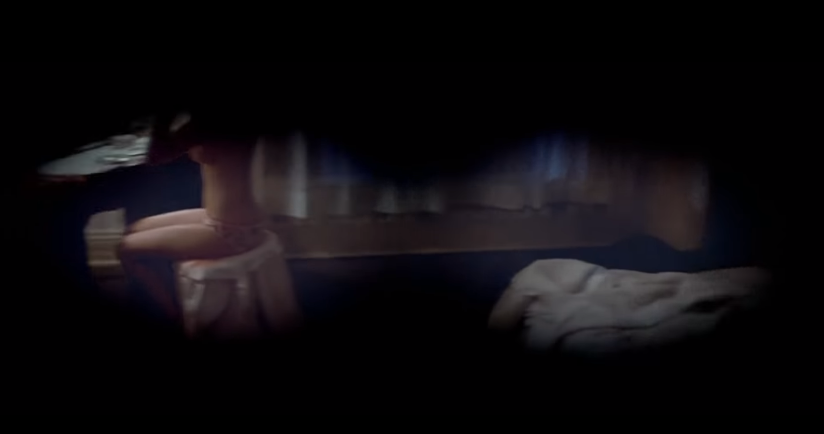
          After the character reaches the top of the stairs, the character adorns a clown mask, which reduces the frame to two eyeholes. This obscured perspective not only serves the purpose of making the audience uncomfortably claustrophobic, but lets us know that whoever this character is, their view of life isn’t right. It’s skewed. They aren’t seeing the whole picture.
        We see him cross down a hallway into a bedroom, which houses a teenage girl in nothing but her underwear, looking at herself in a mirror. The girl exclaims “Michael!,’ before the character stabs her to death with the kitchen knife. The character, now established as Michael, clearly had a relationship with these people. That didn’t stop him from killing them in cold blood.
          We then see Michael, still from the point of view of his clown mask, run down the stairs and out of the house and into the driveway. Concurrently, a car pulls up. A man and a woman in formal attire exit the vehicle and approach the character. At this point we see that the two other characters are much taller than Michael is.
          The man presses Michael and proceeds to remove the mask from his face. The scene then cuts for the first time to a mid shot of a child in a clown costume, no more than eight years old, covered in blood. The couple, presumably his parents, stare at him in horror as the camera pans out into a master shot that includes the house, the neighborhood, and the driveway. He has just murdered his sister.
This scene is powerful because it utilizes an experimental version of the first person point of view shot to establish Michael Myers' sociopathic world view, and contrasts it with the common life of American suburbia.


Friday, September 6, 2019

Ethan Gets Murked: Shot Analysis


First Shot: Establishing of the school. This establishes the bleak setting of the school, and sets the tone for the rest of the short.

Second shot: Long shot of lockers. This shot establishes the internal setting, and sets up the next shot of Ethan

Third shot: over the shoulder. Zooms out of PoV into an over the shoulder of Ethan opening his locker

Fourth shot: Single of Ethan from inside the locker. Shows the setting from the perspective of inside the locker

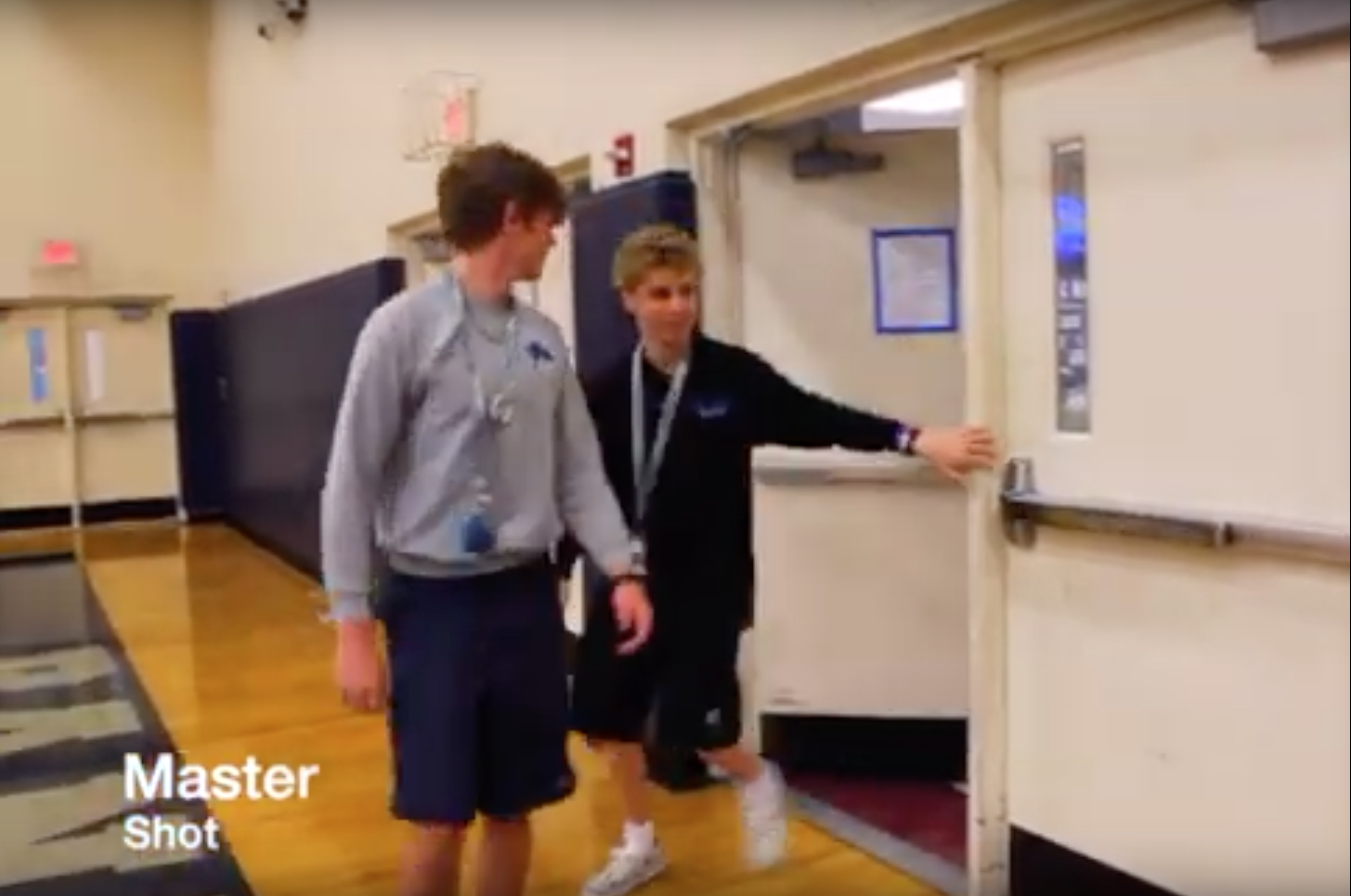
Fifth shot: Long shot of Ethan and Garrett walking to gym. It helps make a simple quick and easy visual transition that documents the characters moving from point A to point B

Sixth shot: Low angle of Ethan and Garrett fighting. Low angles help show the importance of the scene while imposing a sense of miniscule-ness in the audience 

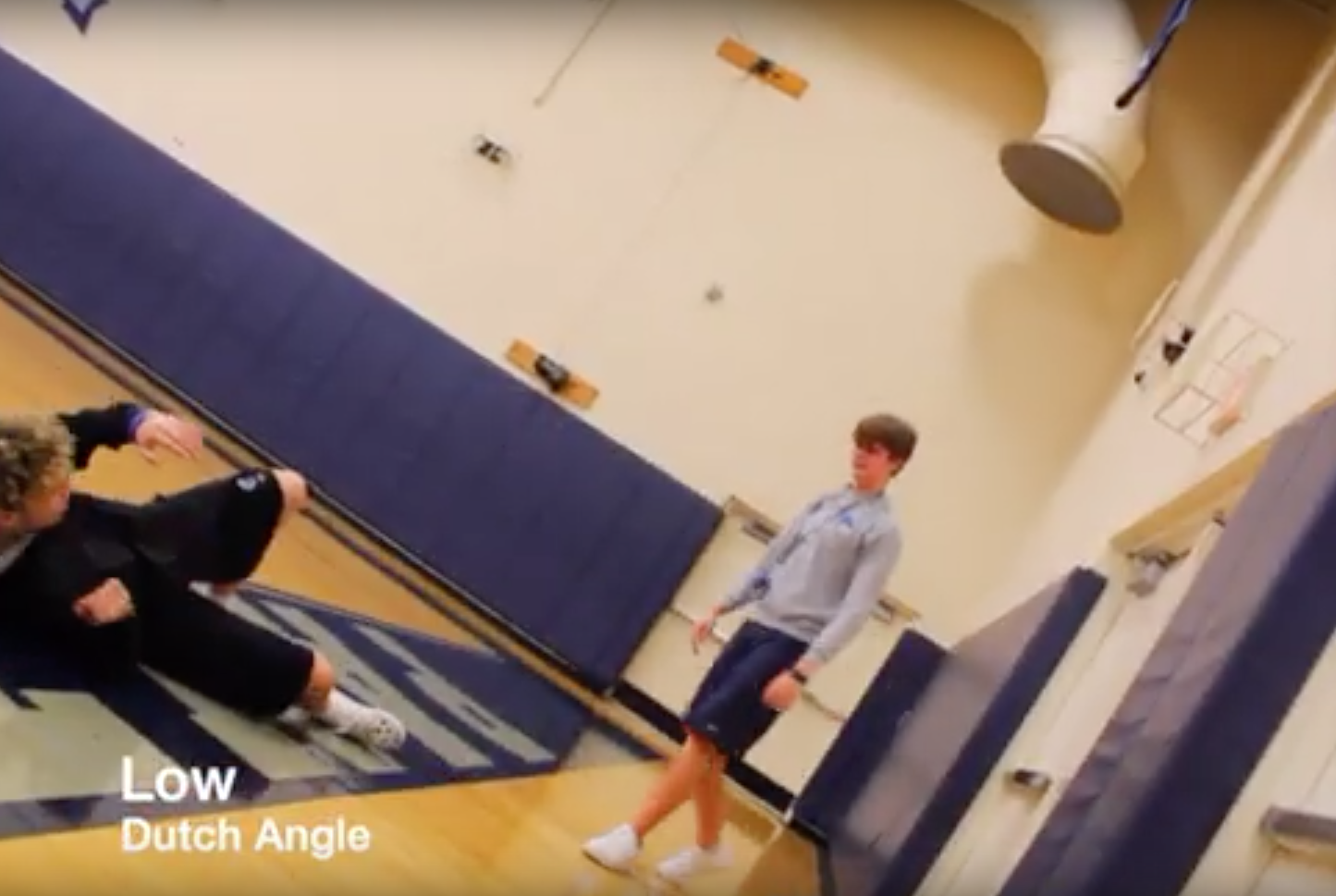
Seventh shot: Garrett knocks camera from low angle into a dutch angle. Unique transition into next shot, shows that characters have a 4th wall effect and makes the audience apart of the action

Eighth shot: High Angle of Ethan at the bathroom sink. It gives the audience a clearer view of the setting while making the focused character

Ninth shot: Close up of Ethan, he has a black eye. Humanizes character that’s being focused on while conveying strong emotions in the audience depending on what the mood is at the moment

Tenth shot: zoom out from the close up to a long shot. Wraps up the character story by transitioning to a close up to a long angle, it also frames the character giving all the focus to that specific character


The Clown: Working Around The Problems of the Rough Cut

When we were tasked with working with what we had with the rough cut for our final product, we were presented with one major issue. This is...